



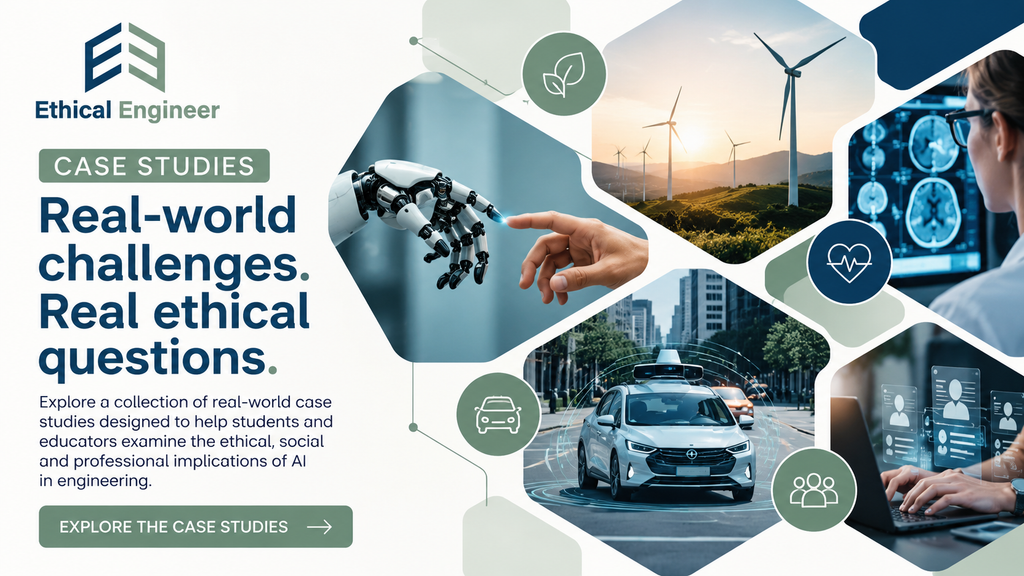
What happens when an AI recruitment system disadvantages certain applicants? Who is responsible when an autonomous vehicle makes a mistake? How should organisations balance the benefits of facial recognition with people's right to privacy?
These questions demonstrate why ethical reasoning is becoming an essential part of engineering education. As AI systems are introduced across sectors, engineers must understand how technical decisions can affect individuals, communities and society.
The Ethical Engineer project has developed a collection of real-world case studies designed to help students and educators explore these challenges in a practical and accessible way.
The collection examines applications of AI across areas including healthcare, recruitment, autonomous transport, facial recognition, data analytics and environmental sustainability.
Rather than presenting ethical decisions as simple questions with right or wrong answers, the case studies encourage learners to consider competing priorities, examine possible consequences and reflect on professional responsibilities.
For educators, these materials can support classroom discussions, group activities and problem-solving exercises. Students can explore different stakeholder perspectives while developing the critical thinking skills needed to navigate complex engineering decisions.
By connecting ethical principles with recognisable situations, case-based learning helps bridge the gap between academic theory and professional practice.
Explore the resource: Ethical Engineer Case Studies