



As artificial intelligence becomes increasingly integrated into engineering, universities face an important challenge: how can they prepare students to understand not only the technical capabilities of AI, but also its ethical consequences?
Engineering graduates are entering a profession where decisions about data, automation and intelligent systems can directly affect people's rights, safety and opportunities. Technical expertise remains essential, but it must be supported by an understanding of fairness, transparency, accountability and human wellbeing.
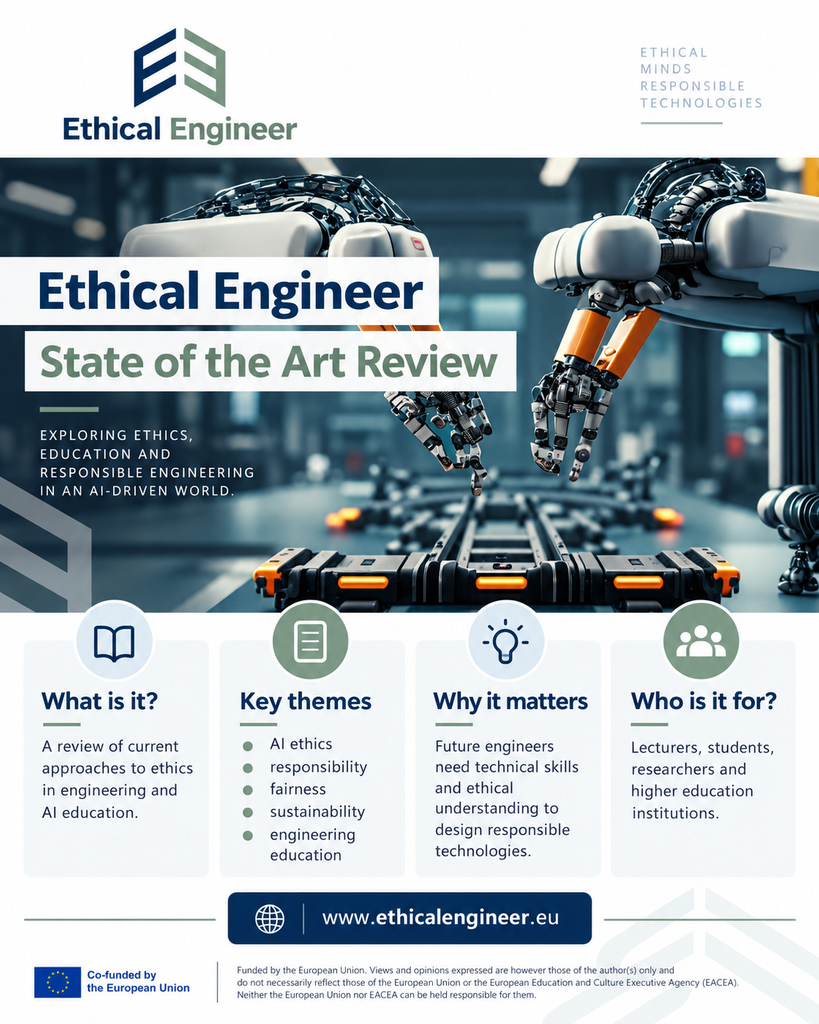
The Ethical Engineer project's State of the Art Review examines how ethics is currently addressed in engineering education, identifying existing approaches, emerging teaching practices and areas requiring further development.
The Review considers the importance of integrating ethical reasoning throughout engineering curricula, rather than treating it as a separate subject. It also explores innovative learning methods, including practical scenarios, collaborative discussions and experiential learning, which can help students connect ethical principles with real engineering challenges.
For educators, the Review provides a foundation for reflecting on existing teaching practices and identifying opportunities to introduce ethical considerations into technical subjects.
As AI technologies continue to develop, engineering education must evolve alongside them. By making ethics a central part of learning, universities can help prepare graduates to create technologies that are not only effective, but also responsible and trustworthy.
Explore the resource: Ethical Engineer State of the Art Review