



Teaching artificial intelligence ethics does not have to rely entirely on lectures and theoretical discussions. Digital tools can help educators create engaging learning experiences where students actively explore ethical challenges.
As AI becomes increasingly common in higher education, educators need opportunities to examine how digital technologies influence learning, decision-making and participation. However, selecting appropriate tools also requires consideration of accessibility, fairness, data protection and responsible use.
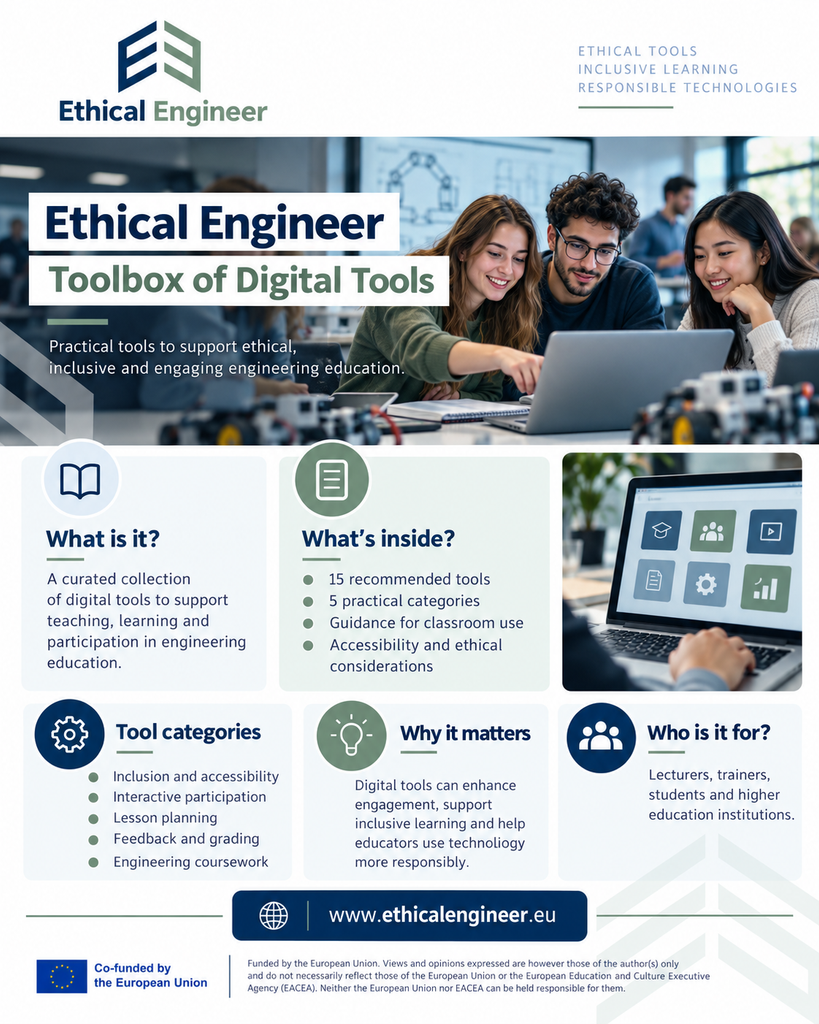
To support educators, the Ethical Engineer project has developed a Toolbox of Recommended Digital Tools, bringing together 15 tools that can support teaching and learning.
The Toolbox covers five areas: Inclusion and Accessibility, Interactive Participation, Lesson Planning, Feedback and Grading, and Engineering Coursework.
Each tool is accompanied by guidance on its use, accessibility considerations and ethical alignment, helping educators make informed decisions about the technologies they introduce into their classrooms.
The resource is particularly relevant for engineering lecturers who want to incorporate more interactive approaches into their teaching while encouraging students to think critically about AI.
Whether supporting collaborative activities, developing learning materials or encouraging student feedback, digital tools can provide valuable opportunities to connect technological innovation with responsible educational practice.
Explore the resource: Toolbox of Digital Tools