


Europe's approach to artificial intelligence entered an important new phase in August 2026, as further provisions of the EU AI Act became applicable and enforcement began.
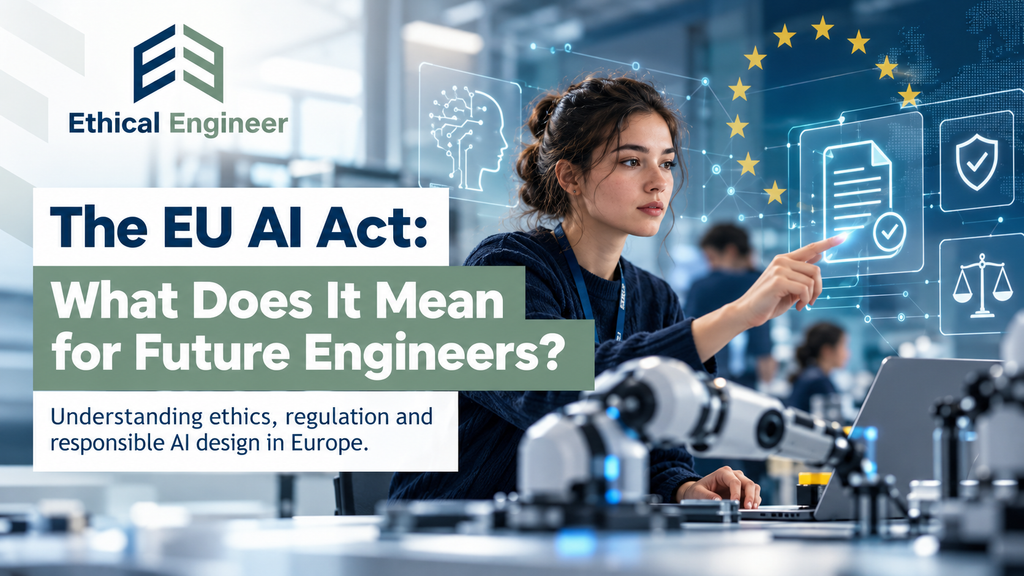
The AI Act establishes a risk-based framework for regulating artificial intelligence, with the aim of supporting innovation while protecting safety, fundamental rights and public trust.
For engineers, this represents a significant development. Designing and deploying AI systems increasingly requires consideration of not only technical performance, but also transparency, documentation, oversight and potential harm.
Under the legislation, certain AI practices are prohibited, while systems classified as high-risk are subject to additional requirements. Following legislative changes introduced in 2026, the main high-risk requirements will apply from December 2027 for specified use cases and August 2028 for AI embedded in certain regulated products. EPRS Website+1
These developments highlight the importance of preparing engineering students to understand ethical and regulatory responsibilities before entering professional practice.
Through its educational resources, Ethical Engineer supports learners in exploring fairness, accountability, transparency and responsible AI design. These skills will be increasingly valuable as European organisations adapt to the evolving regulatory environment.
Further reading: European Commission – AI Act